Physical Address
304 North Cardinal St.
Dorchester Center, MA 02124
Physical Address
304 North Cardinal St.
Dorchester Center, MA 02124

Understanding your vehicle’s cylinder head is essential for any car owner or aspiring mechanic. The cylinder head sits atop the engine block and plays a critical role in your engine’s operation by sealing the combustion chamber and housing vital components. This guide will explain the function, types, common issues, and maintenance needs of cylinder heads in simple terms.
Disclaimer: This article provides general information only. For specific vehicle concerns, always consult with a qualified automotive professional.
Throughout this guide, you may see Bilal and Omar discussing vehicle systems, maintenance procedures, and troubleshooting situations. They are fictional educational characters created by Remliks Solutions to help explain automotive and truck concepts in a practical and engaging way.
A cylinder head is a detachable metal plate that covers the top of the engine cylinders. It forms the upper part of the combustion chamber and contains several crucial components that allow your engine to function properly.
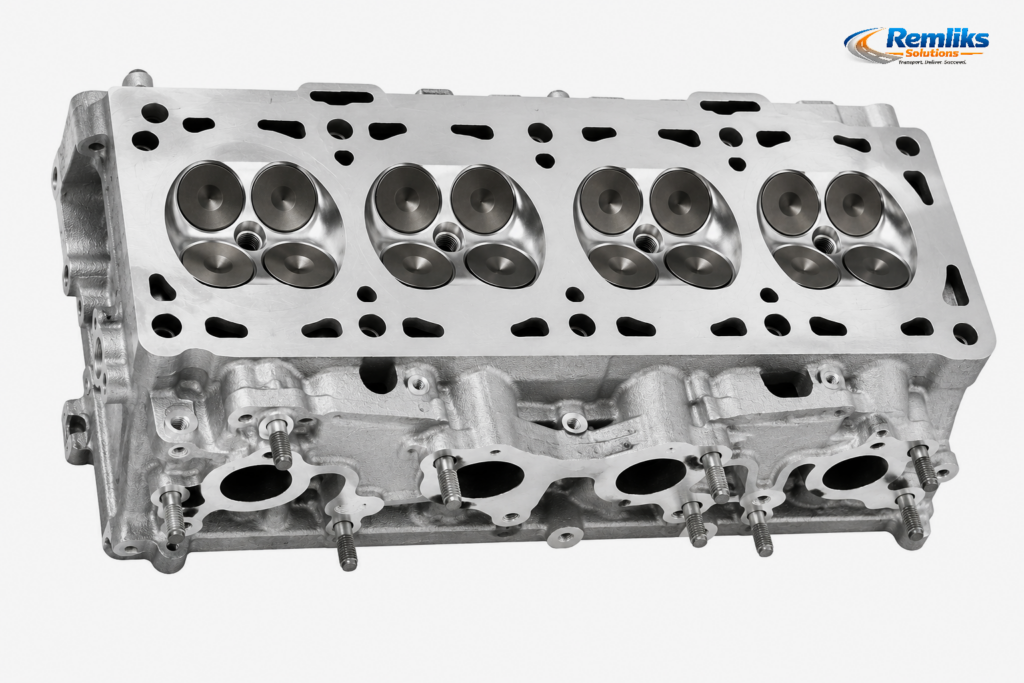
The cylinder head performs several important functions:
Cylinder heads are typically made from one of two materials:
A cylinder head contains several integrated components that work together to ensure proper engine operation.
The cylinder head houses the intake and exhaust valves that control the flow of air and exhaust gases.
Many cylinder heads contain one or more camshafts that control the opening and closing of the valves.
For more information on camshafts, you might find our camshaft function and types guide helpful.
Our spark plugs complete guide offers more detailed information about spark plug function and maintenance.
The cylinder head contains channels through which coolant flows to remove excess heat from the combustion process. These passages connect with the engine block’s cooling system.
Separate channels allow engine oil to reach moving parts like the camshaft and valves for lubrication.
Cylinder heads vary in design based on the engine configuration and intended application.
Different engine designs require different cylinder head configurations:
The shape of the combustion chamber in the cylinder head affects engine performance and efficiency:
| Cylinder Head Type | Advantages | Disadvantages | Common Applications |
|---|---|---|---|
| Cast Iron | Durable, heat resistant, less prone to warping | Heavy, poor heat dissipation | Older vehicles, trucks, heavy-duty applications |
| Aluminum | Lightweight, better heat dissipation | More prone to warping/cracking | Modern passenger vehicles, performance engines |
| SOHC | Simpler design, fewer parts | Less precise valve control | Economy vehicles, older designs |
| DOHC | Precise valve control, better performance | More complex, more expensive | Modern performance and efficiency-focused engines |
| Hemi | Large valve area, efficient combustion | More complex, often higher cost | Performance vehicles, some trucks |
| Pentroof | Excellent airflow, efficient combustion | More complex than simpler designs | Most modern multi-valve engines |
The cylinder head doesn’t work in isolation—it’s part of an integrated system with other engine components.
The cylinder head connects directly to the intake and exhaust manifolds:
For more information about air intake systems, you might find our air intake components guide useful.
The cylinder head’s coolant passages connect to the engine block and radiator, forming a complete cooling circuit:
Oil from the engine’s oil pump flows through dedicated passages in the cylinder head to lubricate:
The cylinder head attaches to the engine block using:
Omar and Bilal Workshop Scenario:
Bilal: Why is the cylinder head bolted so tightly to the engine block?
Omar: The cylinder head must withstand extreme pressure from combustion. The head bolts are tightened to very specific torque values in a precise sequence to ensure even sealing pressure across the entire head gasket surface. This prevents leaks and maintains the structural integrity of the combustion chamber.
Cylinder heads can develop several issues over time, especially if maintenance is neglected.
Cylinder heads, particularly aluminum ones, can develop cracks due to:
Cracks may occur in various locations:
When a cylinder head overheats, it may warp (distort from its flat shape), causing:
Issues with valves in the cylinder head include:
While not strictly a cylinder head problem, head gasket failures are common and often related to cylinder head issues:
Modern direct-injection engines may experience carbon buildup on:
This can reduce airflow, cause rough idling, and decrease performance.
Recognizing the signs of cylinder head issues can help prevent more serious engine damage.
During inspection, you might notice:
Omar and Bilal Workshop Scenario:
Bilal: I noticed white smoke coming from my exhaust and my engine is running a bit rough. Could this be a cylinder head problem?
Omar: Those symptoms could indicate several issues, including a potential head gasket failure which is often related to the cylinder head. White smoke typically means coolant is entering the combustion chamber. We should perform a cooling system pressure test and check for combustion gases in the coolant before making any conclusions. Guessing without proper diagnosis can lead to unnecessary repairs.
Proper diagnosis is crucial before deciding on cylinder head repairs or replacement.
A thorough visual inspection can reveal:
A compression test can help identify:
Normal compression varies by engine but should generally be consistent across all cylinders (usually within 10% of each other).
More precise than a compression test, a leak-down test:
Several tests can help identify head-related cooling system issues:
Analyzing engine oil can reveal:
For a thorough assessment, a machine shop can:
Depending on the problem, several repair options may be available.
If the cylinder head is warped but not cracked, a machine shop can:
Some cracks can be repaired, depending on their location and severity:
Note: Not all cracks are repairable, and some repairs may not be cost-effective compared to replacement.
Valve problems often require:
A comprehensive cylinder head rebuild typically includes:
In cases of severe damage, replacement may be the most cost-effective option:
Proper maintenance can help prevent many cylinder head problems.
Since overheating is a primary cause of cylinder head damage, maintaining your cooling system is crucial:
Clean oil helps protect cylinder head components:
For interference engines (where piston-to-valve contact can occur), timing system maintenance is critical:
Our ignition timing guide provides additional information on timing-related topics.
Periodic visual inspections can catch problems early:
When replacing a cylinder head, several factors should be considered.
| Option | Pros | Cons | Best For |
|---|---|---|---|
| New OEM | Exact fit, full warranty, latest design | Highest cost | Vehicles under warranty, restoration projects |
| New Aftermarket | Lower cost than OEM, often good quality | Quality varies by manufacturer | Budget-conscious repairs on daily drivers |
| Remanufactured | Good balance of cost and quality, often comes with warranty | May have shorter warranty than new | Most repair situations |
| Used | Lowest cost | Unknown condition, no warranty, may need additional work | Extremely budget-limited situations |
Proper cylinder head installation is critical:
When replacing a cylinder head, consider replacing these related components:
Follow this checklist to help maintain your cylinder head and prevent problems:
A properly maintained cylinder head can last the lifetime of the engine. However, factors like overheating, poor maintenance, or manufacturing defects can shorten its lifespan. Most cylinder head issues result from cooling system problems rather than normal wear.
Driving with a cracked cylinder head is not recommended. Depending on the crack’s location, it could lead to coolant loss, oil contamination, loss of compression, or even catastrophic engine failure. If you suspect a cracked cylinder head, have it inspected by a professional as soon as possible.
The most common cause of cylinder head cracking is overheating. Other causes include thermal stress from rapid temperature changes, casting defects, age and metal fatigue, and improper torque during installation.
Costs vary widely depending on the vehicle, the extent of damage, and your location. Cylinder head resurfacing might cost $200-$500, while a complete rebuild could be $800-$2,000. Replacement with a remanufactured head typically ranges from $1,000-$3,000, including installation. New OEM heads can be significantly more expensive.
While technically possible for experienced DIY mechanics, cylinder head replacement is a complex job that requires specialized tools and knowledge. Incorrect installation can lead to immediate failure or premature problems. For most vehicle owners, this is a job best left to professionals.
The engine block is the main structure of the engine, containing the cylinders where combustion occurs. The cylinder head sits on top of the block, sealing the cylinders and housing the valves, camshafts, and other components. Together, they form the complete combustion chamber.
Warped cylinder heads typically show symptoms similar to a blown head gasket: overheating, coolant loss, poor engine performance, or white exhaust smoke. However, definitive diagnosis requires removing the head and checking it with a straightedge and feeler gauges to measure any distortion.
Not necessarily. While aluminum heads are more prone to warping and cracking under extreme conditions, they offer superior heat dissipation and reduced weight. Modern aluminum heads are designed to withstand normal operating conditions effectively. The key is proper maintenance, especially of the cooling system.
Excessive carbon buildup can cause several issues: it can prevent valves from seating properly, leading to burnt valves; it can increase compression and cause detonation; and it can interfere with proper airflow. Regular maintenance and using quality fuel can help minimize carbon buildup.
Not always. If the cylinder head is flat and undamaged, you may only need to replace the head gasket. However, it’s standard practice to have the head inspected and resurfaced when replacing the gasket to ensure proper sealing. If the head is warped or cracked, additional repairs or replacement will be necessary.
The cylinder head is a critical engine component that deserves proper attention and maintenance. By understanding its function, recognizing symptoms of problems, and following appropriate maintenance practices, you can help ensure your engine remains reliable and efficient.
Remember that when it comes to cylinder head issues, early detection and proper diagnosis are key. Addressing cooling system problems promptly, following maintenance schedules, and seeking professional help when needed can prevent minor issues from becoming major expenses.
For more information about related engine components, you might find these resources helpful:
If you’re experiencing symptoms that might indicate cylinder head problems, consult with a qualified automotive professional who can provide an accurate diagnosis and recommend appropriate solutions.
