Physical Address
304 North Cardinal St.
Dorchester Center, MA 02124
Physical Address
304 North Cardinal St.
Dorchester Center, MA 02124

Disclaimer: This article provides general information only. Always consult your vehicle’s manual and a certified technician for specific maintenance and diagnostic advice.
Throughout this guide, you may see Bilal and Omar discussing vehicle systems, maintenance procedures, and troubleshooting situations. They are fictional educational characters created by Remliks Solutions to help explain automotive and truck concepts in a practical and engaging way.
The engine relies on timing chains to synchronize its internal components. Understanding how these metal chains work can help you spot problems early, save money on repairs, and extend the life of your vehicle. In this guide, we will explore the function, common issues, and maintenance of engine timing chains in simple, clear terms.
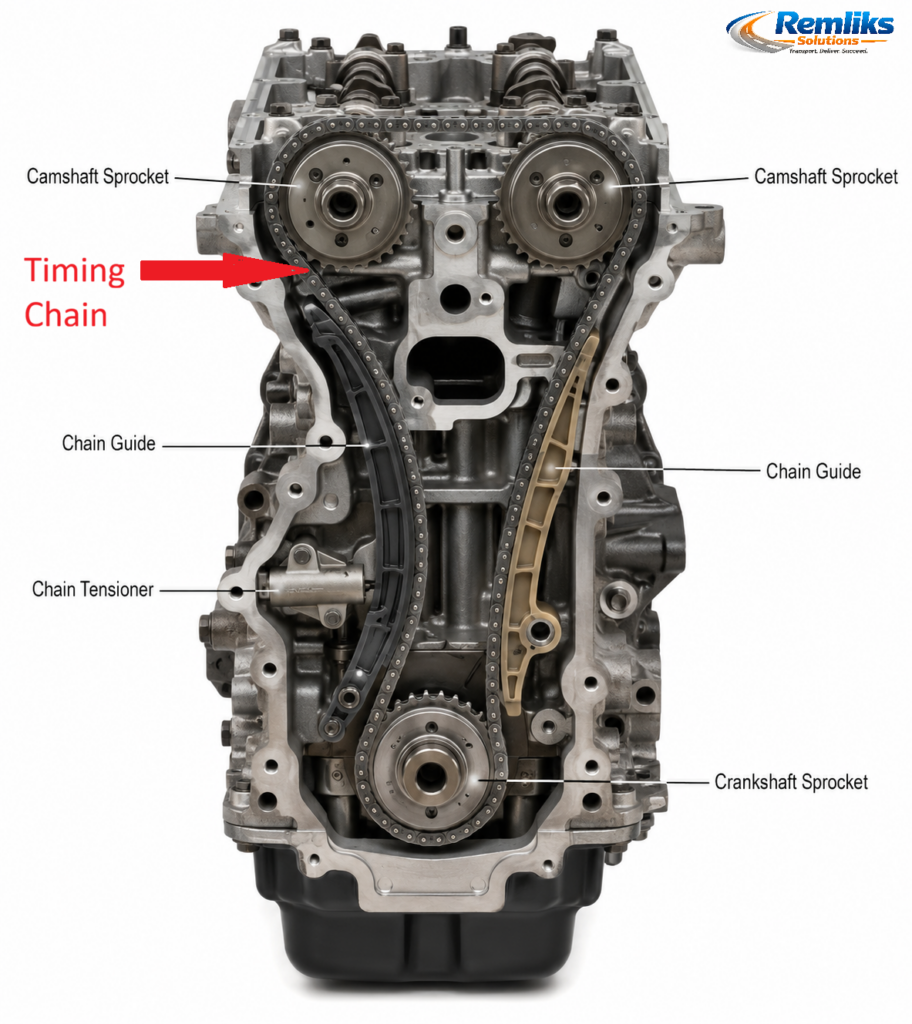
A timing chain is a sturdy metal chain inside the engine. It connects the crankshaft to the camshaft. You can learn more about these parts in our engine crankshaft guide and our detailed article on camshaft function and types.
The primary job of the timing chain is to ensure that the engine’s valves open and close at the exact right moment (or “timing”) in relation to the movement of the pistons.
When the crankshaft turns, it moves the pistons up and down inside the cylinders. Meanwhile, the camshaft opens and closes the valves that let air and fuel in, and exhaust gases out. The timing chain locks these two systems together. If the chain stretches or breaks, this synchronization fails, leading to poor engine performance or severe engine damage.
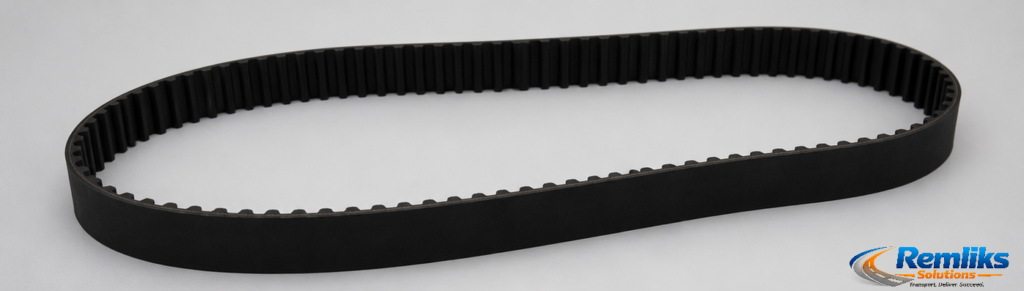
Many drivers confuse timing chains with timing belts. While they serve the same basic purpose, their materials and lifespans are very different. For a deeper comparison, you can read our article on timing belts.
| Feature | Timing Chains | Timing Belts (see image below) |
|---|---|---|
| Material | Metal (steel alloy) | Rubber with nylon reinforcement |
| Lifespan | Often lasts the engine’s life | Usually replaced every 60,000-100,000 miles |
| Noise | Slightly louder | Quieter operation |
| Location | Inside the engine (bathed in oil) | Outside the engine (behind a cover) |
| Maintenance | Requires clean oil | Requires scheduled replacement |
| Failure Warning | Often gives warning signs (rattles) | Rarely gives warning, breaks suddenly |
A timing chain does not work alone. It relies on several supporting components to maintain proper tension and alignment.
A timing chain tensioner keeps the chain tight. Most modern vehicles use hydraulic tensioners. These tensioners use engine oil pressure to push against the chain, taking up the slack as the chain naturally stretches over time.
Guides are flat plastic or nylon pieces attached to the engine block. They act as a track for the chain to glide against. These guides prevent the chain from slapping against the metal engine block, which would cause damage and excessive noise.
Sprockets are the toothed wheels that attach to the crankshaft and camshaft(s). The teeth on the sprockets fit perfectly into the links of the timing chain. Over time, the teeth can wear down, which may cause the chain to skip a tooth.
Bilal: Omar, I am looking at this customer’s car. The engine runs fine, but there is a loud rattling noise coming from the front of the engine when it idles. Could it be the exhaust?
Omar: It could be, Bilal, but that specific rattle at idle is a very common symptom of a stretched timing chain or worn chain guides. Before we assume anything, we must follow proper diagnostic procedures. Have you checked the engine oil level and condition?
Bilal: Yes, the oil is low and very dirty. The customer admitted they missed their last two oil changes. Why does the oil matter so much for the chain?
Omar: Great question. Modern timing chain tensioners are hydraulic. They rely entirely on clean engine oil at the correct pressure to keep the chain tight. When oil is low or dirty, the tensioner fails to pressurize correctly. The chain gets loose, slaps against the plastic guides, and creates that rattling sound.
Bilal: So, changing the oil might fix the noise?
Omar: Fresh oil may help the tensioner function better, but it will not fix a chain that has already stretched or guides that are already broken. We need to use a diagnostic scan tool to check for timing correlation codes, and then physically inspect the chain tension through the oil filler cap. We never replace parts based purely on a guess.
Timing chains are durable, but they are not indestructible. Recognizing the early signs of failure can prevent catastrophic engine damage.
As Omar explained to Bilal, a rattling or buzzing sound from the front of the engine during idle is the most common symptom. This happens when the chain is loose and vibrating against the guides or the engine block.
When a timing chain stretches, the camshaft and crankshaft sensors detect that they are out of sync. The engine computer (ECU) will trigger the Check Engine Light. You will likely see error codes related to camshaft-crankshaft correlation. You can learn more about these issues in our Warning Lights & Error Codes section.
If the chain skips a tooth on the sprocket, the engine timing will be off. The valves will open and close at the wrong time. This can cause engine misfires, a rough idle, sluggish acceleration, and a noticeable lack of power. Learn more about how this affects the whole system in our Engine System guides.
When a timing chain rubs against worn guides or when the sprockets wear down, tiny metal shavings enter the engine oil. When you change your oil, look for metallic specks in the old oil. This is a major red flag indicating severe internal wear.
Why do timing chains fail? The causes usually point back to maintenance habits and operating conditions.
The number one cause of timing chain failure is poor lubrication. As mentioned earlier, the chain and tensioners need constant, clean oil. Skipping oil changes causes sludge to build up, blocking the tiny oil passages that feed the tensioners. Without oil pressure, the chain runs dry and stretches rapidly. Proper lubrication is critical for the entire engine, not just the chain. You can read more about this in our Lubrication System guides.
Even with perfect maintenance, metal rubbing against metal causes friction. Over hundreds of thousands of miles, the pins and plates inside the chain slowly wear down. This wear causes the chain to elongate (stretch).
Sudden, aggressive acceleration forces the timing chain to snap tight very quickly. Over time, these sudden shocks stretch the chain and wear the sprockets prematurely. Smooth, steady driving promotes longer chain life.
You cannot easily inspect a timing chain visually because it is hidden inside the engine. Therefore, preventative maintenance is your best tool.
Changing your engine oil on schedule is the single most important thing you can do for your timing chain. Always use the oil viscosity recommended by the vehicle manufacturer. High-quality synthetic oil resists heat and sludge better, keeping the tensioners functioning perfectly. Check our Automotive Fluids & Chemicals section for oil recommendations.
Do not ignore new sounds. If you hear a rattle, tick, or buzz when you start the engine or let it idle, have it inspected immediately. Catching a loose timing chain early can save you thousands of dollars. Visit our Troubleshooting Center for more help diagnosing engine noises.
If you are doing major engine work, like replacing the cylinder head gasket, it is often wise to replace the timing chain, tensioners, and guides at the same time. The labor cost to open the engine is significant, so replacing the chain while the engine is apart is a smart, cost-effective choice.
If you suspect your timing chain is failing, professionals follow a specific set of steps to confirm the problem.
Use an OBD2 scanner to check for camshaft/crankshaft correlation codes (e.g., P0008, P0009).
Inspect oil level and condition. Look for metal shavings that indicate internal wear.
Use a mechanic’s stethoscope to pinpoint the rattling noise to the timing cover area.
Remove the timing cover to measure chain stretch and inspect the guides and sprockets.
When a mechanic physically inspects the chain, they look at the timing marks on the sprockets. These marks must align perfectly when the engine is at Top Dead Center (TDC). If the marks are off by a few degrees, the chain has stretched. Proper timing is essential for the ignition system to work correctly.
Unlike timing belts, timing chains do not have a strict replacement interval in most owner’s manuals. They are designed to last the life of the vehicle. However, “life of the vehicle” does not mean forever; it means the chain should last as long as the engine block.
You should only replace a timing chain when it shows clear signs of failure, such as stretching, rattling, or triggering warning lights. Replacing a chain preventatively is usually only recommended if you are rebuilding the engine or if you own a vehicle known for premature chain wear.
Replacing a timing chain is a major job. It requires removing the engine’s front cover, aligning the timing marks precisely, and torquing everything back to factory specifications. It requires special automotive tools and equipment. Because the timing chain keeps the pistons and valves in sync, a mistake during installation can cause the valves to hit the pistons, destroying the engine.
If you are not experienced with advanced engine work, this is a job best left to a professional mechanic.
Use this simple checklist to keep your timing chain and engine healthy:
1. How long do timing chains usually last?
Timing chains are built to last a long time. With regular oil changes and good driving habits, a timing chain can often last over 200,000 miles. However, poor maintenance can cause them to fail much earlier.
2. Can I drive my car with a bad timing chain?
Driving with a stretched or loose timing chain is highly risky. The chain may slip or break, causing the engine’s valves and pistons to collide. This will result in catastrophic engine failure and require a complete engine replacement.
3. What happens if a timing chain breaks while driving?
If a timing chain breaks, the engine will stop immediately. In an “interference engine” (which most modern engines are), the pistons will crash into the open valves, bending the valves and damaging the pistons. This causes massive internal damage.
4. Is it hard to replace a timing chain myself?
Replacing a timing chain requires advanced mechanical knowledge, special locking tools, and a deep understanding of engine timing. For most DIYers, this job is too complex and risky. It is usually safer to hire a certified mechanic.
5. Does a new timing chain improve engine performance?
If your old chain was stretched, installing a new chain will restore proper engine timing. This may help improve fuel economy, smooth out the idle, and restore lost power. However, if the chain was perfectly healthy, replacing it will not increase performance.
6. Are timing chains better than timing belts?
Neither is strictly “better”; they are just different. Chains are more durable and last longer, but they are louder and live inside the engine. Belts are quieter and cheaper to replace, but they require scheduled replacement to prevent sudden breakage. You can learn more about belts in our Learning Center.
The timing chain is a vital component of your engine’s internal system. It works hard to keep the crankshaft and camshaft perfectly synchronized, ensuring your vehicle runs smoothly. While timing chains are built to be durable and often last the life of the engine, they still require proper care to survive.
Clean engine oil is their best friend. Regular oil changes keep the tensioners working properly and the chain well-lubricated. If you ever hear strange rattling noises from the engine or see warning lights on your dashboard, do not ignore them. Early diagnosis may help you avoid severe engine damage and expensive repairs.
Always remember to follow your vehicle’s maintenance schedule and consult a professional mechanic for complex repairs. By taking these simple, responsible steps, you can keep your engine running safely and efficiently for many miles to come.
